This website uses cookies, which are necessary for the technical operation of the website and are always set. Other cookies, which increase the comfort when using this website, are used for direct advertising or to facilitate interaction with other websites and social networks, are only set with your consent.
Configuration
Technically required
These cookies are necessary for the basic functions of the shop.
"Allow all cookies" cookie
"Decline all cookies" cookie
CSRF token
Cookie preferences
Currency change
Customer recognition
Customer-specific caching
Individual prices
PayPal payments
Selected shop
Session
Comfort functions
These cookies are used to make the shopping experience even more appealing, for example for the recognition of the visitor.
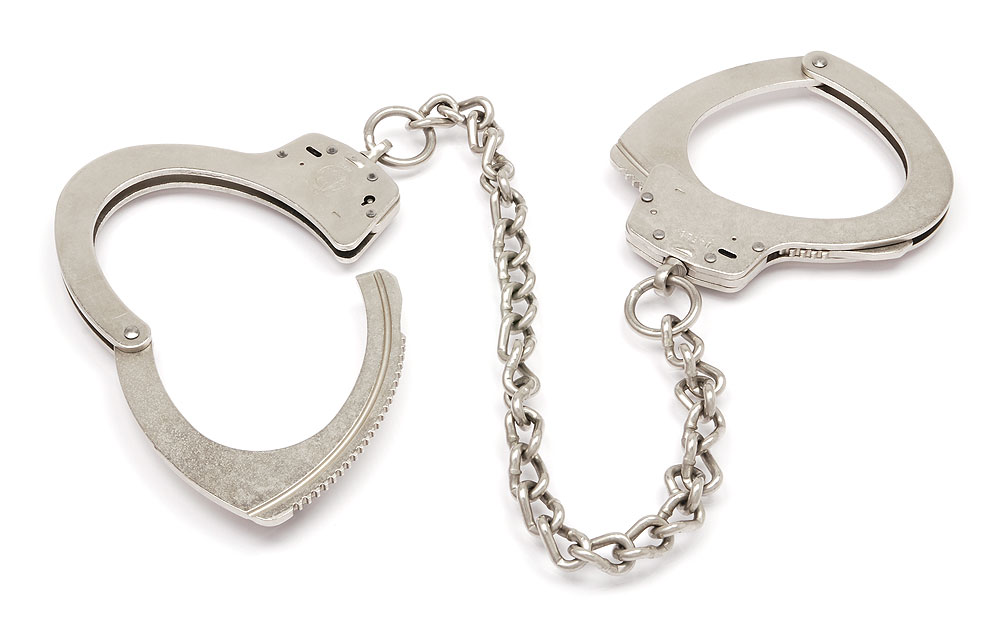
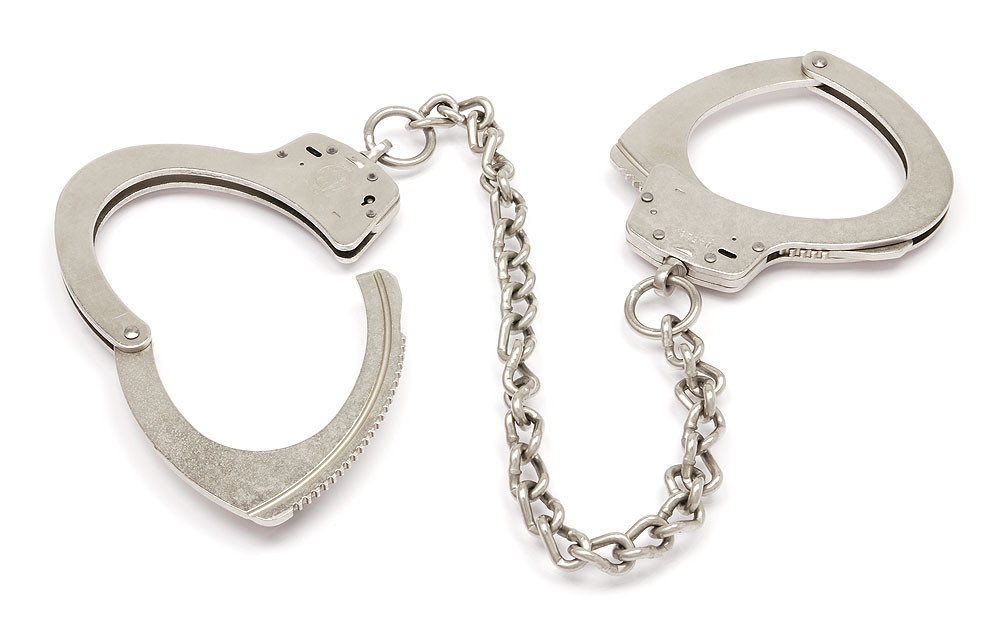
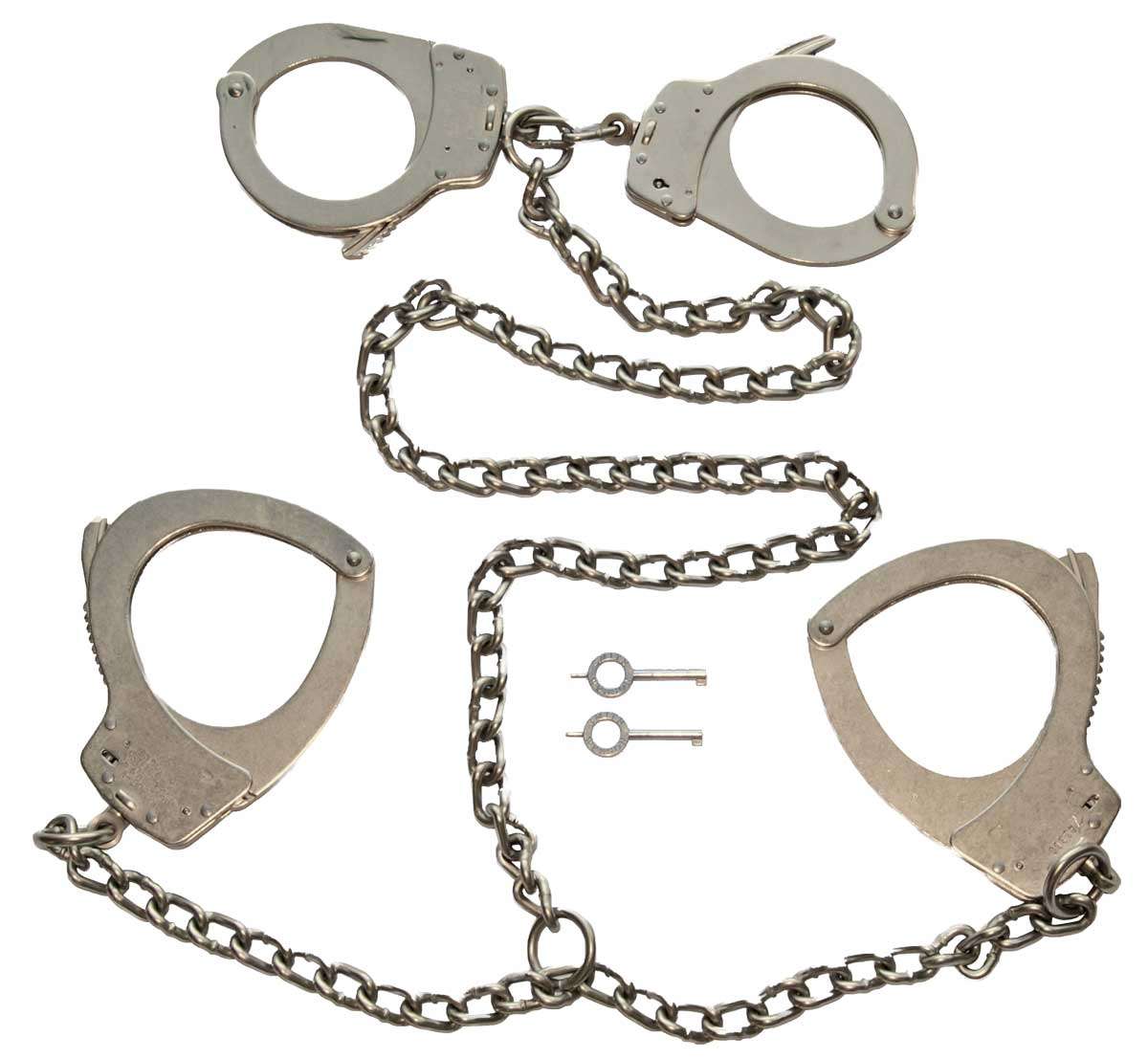
With the high end leg iron M-1900 Silver by Smith & Wesson you can fixate individuals safely and easily when necessary.
PROFESSIONAL EQUIPMENT FOR GUARD AND SECURITY SERVICES
The classic leg iron M-1900 Silver of the renowned manufacturer Smith & Wesson is designed for the special standards and needs of private guard and security services and can be an important part of your professional safety equipment. The Smith & Wesson leg iron M-1900 silver shows excellent workmanship and is made of stable steel. They serve well and reliably during the arrests or the transport of criminals.
HIGH END STEEL AND OPTIMAL FITTING
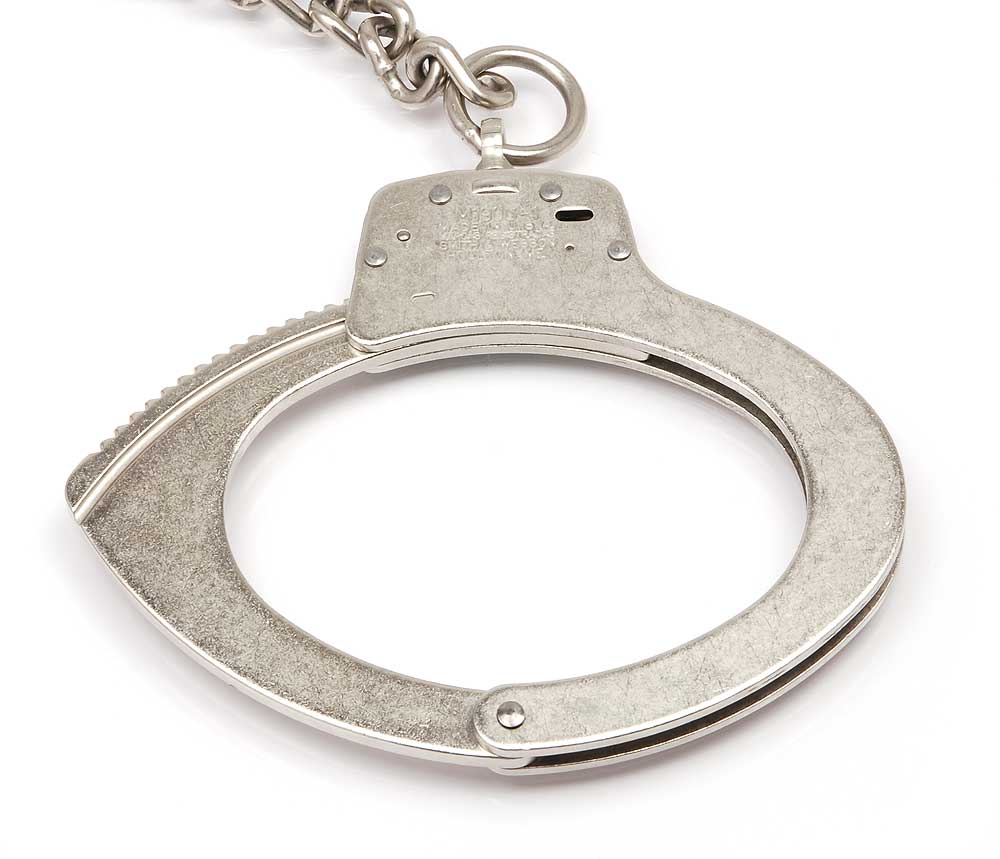
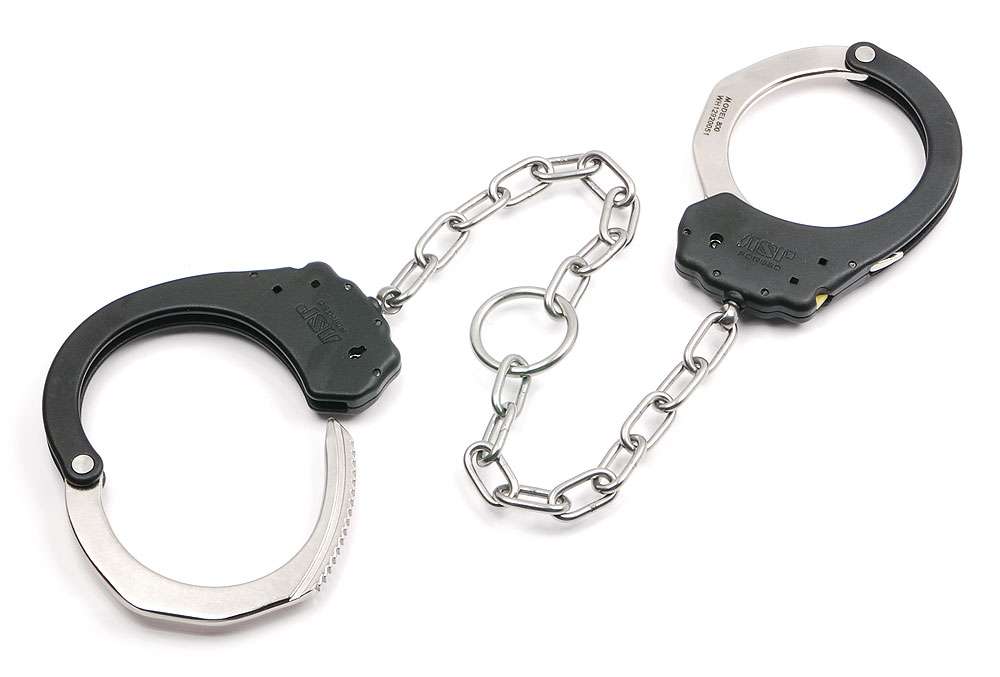
The model M-1900 silver by Smith & Wesson is a leg restraint with pivot joints and chain connection. The chain measures 42 centimeters in length. The M-1900 has an optimal shape adjusted to the ankles. Due to the shape less pressure is exerted on the Achilles tendon. The reliable Smith & Wesson leg iron M-1900 silver has an inner circumference of minimally 200 millimeters and maximally 270 millimeters as well as 22 locking positions. Made from stainless steel and nickel plated and weighs in on approximately 650 grams.
YOUR SMITH & WESSON LEG IRON M-1900 SILVER
The model M-1900 is a high end leg iron for the professional deployment of security services. You will receive the stable restraint for the legs in the classic color silver with a length of 66 centimeters. The contents of delivery include - aside from the Smith & Wesson leg iron itself - two normal keys. Additionally we offer several accessories in our online shop.
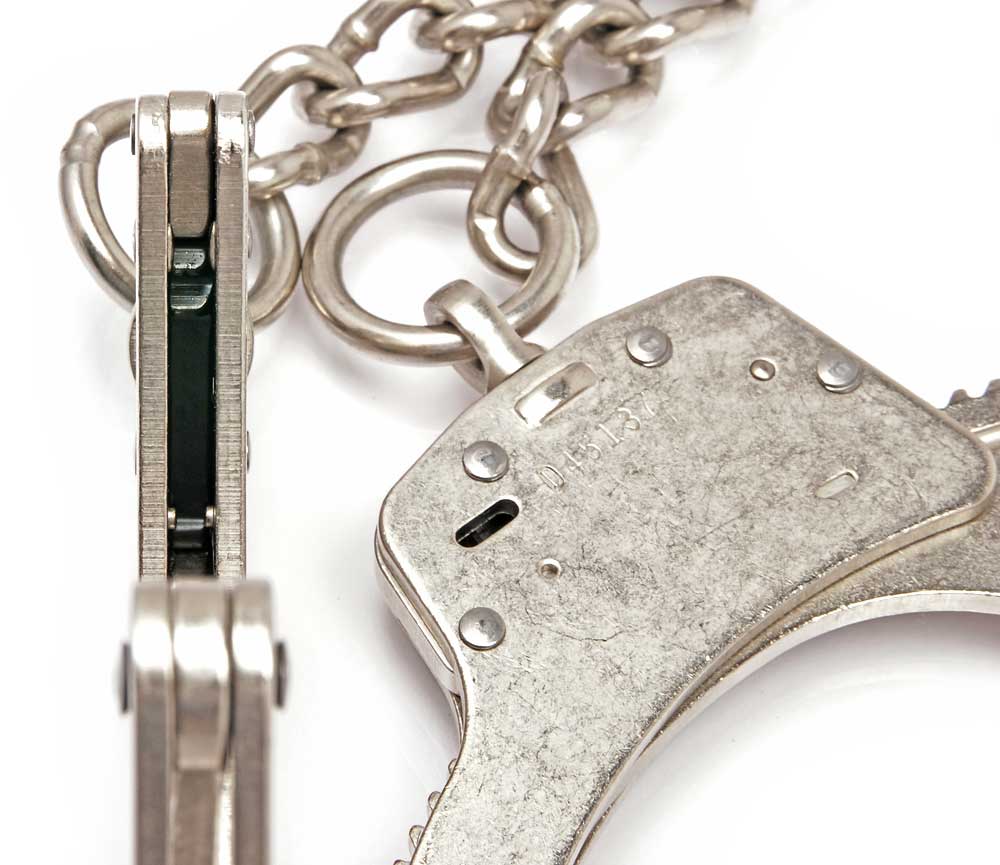
This restraint is equipped with a reliable and safe double lock security mechanism and an individual serial number. You can fix and adjust the leg iron safely by inserting the key spike into the slit and pushing a pin into the direction of the key hole. This interlock against the following adjusting or manipulation of the restraint is opened again by turning the key into the opposite direction of the opening.
This website uses cookies, which are necessary for the technical operation of the website and are always set. Other cookies, which increase the usability of this website, serve for direct advertising or simplify interaction with other websites and social networks, will only be used with your consent. More information